Jace Flores Student Teacher Blog

    • Planning & Preparation

  • Summer Reading Notes

    Unearthing Joy:

    1. I appreciated how digestible the book is written. A lot of texts about education get to be very technical or dense that makes it hard if not near impossible to parse what exactly is being said. This book does a good job getting its concepts across without me having to re-read a section over and over.
    2. I found it interesting how the book provides a multitude of mediums to help get the point(s) across and sort of establish the mood. Beyond the texts and graphs there are also playlists at the start of each chapter as well as little coloring pages. Admittedly I found the coloring pages a bit childish, but hey if it helped someone understand the book then power to them.
    3. I resonated with the ideas of joy and genius being the sort of thematic lynchpins of the book with every student being afforded recognition as being smart and the need for there to be joy in both learning and life in general.
    4. I thought the core ideas of the book were interesting. The HILL model was a good way of tying together the sort of general steps of making teaching history something that can strengthen a student’s identity and ability to control the world so they can change it for the better. The five pursuits needed for the HILL model to succeed were also interesting and fit well into what the HILL model was. Didn’t feel crammed or forced together, if that makes sense. There is clear logic that connect the pursuits and HILL model.
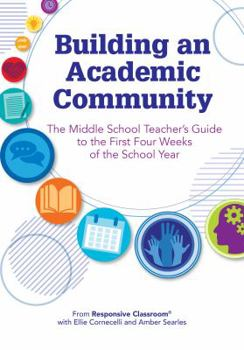
    Building an Academic Community:

    1. I am very fond of the way this book is constructed where it breaks things down into clear objectives and timelines. I like that sort of rigid structure when it comes to accomplishing bigger things as it makes things digestible and comprehensible for me rather then me struggling to wrap my head around all of these ideas and concepts and whatnot.
    2. I thought this sort of rigid structure works well in tandem with the more free form ideas put forward by the Unearthing Joy book. There is a sort of yin-yang between the two I think that help to flesh each other out, BAC providing more tangential and physical ideas while UJ provides more intangible values and such through its HILL model. I can definitely see one merging the two books together for the first month of the school year.
    3. The flow of the goals and such for every week made sense to me. It felt like building foundations within a foundation based around teaching, behavior and routines.
    4. One question I have is I wonder what is missing from this or would be changed in a high school setting. I imagine a lot of this is applicable for those higher grades, but I would imagine the author would change the book a fair bit to meet those standards. Given I am going to teach in a high school setting, it is important I know how much of this book is actually usable.
    August 23, 2024

  • Curriculum Post


    The curriculum I looked over was “History Alive! Pursuing American Ideals” which offers a pretty comprehensive amount of content to be used in class such as powerpoints, activities, worksheets and so on. Having seen Brian teach now (well after I wrote most of this post) he uses it for a foundation and builds on it to better fit his style and the class.

    Thankfully for me the curriculum is pretty well divided into quarters, units and chapters. The first quarter has two units. The first unit looks at what history is and using that knowledge to look at the start of the United States. The second unit of the first quarter looks at the 1850s-1870s, namely the run up to the civil war, the civil war itself, and then reconstruction. This quarter then ends with an assessment. The second quarter also has two units. The first unit looks at the later 19th century with immigration and the progressive era. The second unit looks at the First World War, which will not be completed in this quarter and runs into the start of the third quarter. Nevertheless, there will be a midterm at the end of the second quarter to look back at the first half of the year.

    While the curriculum does not mention specific dates for when units will be done, there being four units and about four months of time gives a good idea of when things will be covered. It is likely the first unit will span the first month of the course, with each unit taking about two weeks to do, give or take.

    The first chunk of the month would be looking at history from a sort of meta perspective. What is history, why history is important, how to interpret history, etc. There is various mediums to teach the lesson. This includes a reading with a chapter looking at how to understand history by using the I Have A Dream Speech as an example of looking at what history is, with little activities on defining vocab words, figuring out what primary and secondary sources are and a multi choice question on what is not true of history. There is a slide show that is divided into a preview on what will be covered, an activity about gathering information about five students, going over some key vocab words and putting it all together in a timeline activity. Lastly, there is a series of videos that go over what history is with small activities to do that encapsulate the key ideas of the videos. There are optional readings as well to expand on certain ideas or concepts, probably for if there is time or interest. This includes a post about how to research and what different sources are, with accompanying questions asking students how they would research Lincoln, giving examples of different sources and evaluating different sources on different metrics. Then an assessment is provided with three options. The first is a timeline activity wherein the student has to make a timeline of their own life, color coding the three most important events and recording what family members think are the three most important. The second is a question game where the student has to answer questions that then reveal a picture that is key to answering the last question. The third are simple assessments that have multiple choice questions and some paragraph questions to see if the students have grasped how to analyze and understand history.

    The second unit looks at the foundations of the United States and is the first “actual” history that is covered. The set up is much the same as the first unit but obviously with different content covered. The reading introduces the core ideas of what the Founding Father envisions, and then asking students how they would rate the implementation of those ideas and answering short questions about the Declaration of Independence. The slideshow which includes rating the core ideas (as above), but discussing them with classmates, going over some primary documents, defining and contextualizing parts of the Declaration of Independence, looking at 18 historical pictures with a partner and filling in a handout, defining some vocab words and then asking students to write a full essay processing all of this. For the videos the students have to watch a few, read some follow up questions and fill in the blanks. For the optional extra reading it is a small post about free enterprise and answering some questions about the definition of it, why it developed and the characteristics/benefits of it. For assessment there are three options. The first is writing a full essay about whether Americans have lived up to the ideals of the Declaration of Independence. The second is a game where students have to answer a series of questions, getting points for right answers, that eventually unlock the final question. The third and final is a test with multiple choice questions and short answer questions asking about the Declaration of Independence and American values.

    Given American history is a pretty strong area of mine I feel confident about the content I looked over in this assignment. Perhaps a quick review here and there but I know a good amount of what is being looked at here off the top of my head.

    August 23, 2024

  • Lessons of Reading Like A Historian

    This book is a pretty nifty guide on how to cover the different facets of history by looking at case studies and picking them apart to reveal important lessons and questions to teach and understand history.

    The first chapter discussed the Pocahontas-John Smith story. It is a good start because it allows questions to be asked about what history is, what sources are and how history is a constantly evolving subject, while being a topic people are broadly familiar with due to its cultural importance.

    The second chapter discussed the Battle of Lexington. This was chosen to mainly look at what narratives are probable/definitive, and which ones are weak or otherwise have little substance to them through looking at primary sources. It also provided an opportunity to look at how myth, intentions and history interact.

    The third chapter discusses Lincoln’s views on slavery. It calls for careful analysis of contemporary sources of both the subject in question and the people around them. It also calls for understanding the context he existed in and judging whether one should be viewed relative to their time or relative to the modern day.

    The fourth chapter discussed Benjamin Harrison’s declaration founding Columbus Day. This section focused on why the declaration happened and how different groups interpreted the declaration differently. Those with fewer historical skills looked at the immediate subject of the declaration while historians looked at the greater context.

    The fifth chapter discusses a letter a rich rural housewife sent to Thomas Edison in 1921. It requires that students look at the greater historical perspective beyond what one primary source provides. This in turn leads to comparing other perspectives via the use of other primary sources and statistics.

    The sixth chapter discusses the Dust Bowl and why it happened. There is a focus on using stories, a valid medium of information, to try and find out why exactly something happened. This can lead to different interpretations of the same facts, particularly as modern issues grow more or less relevant.

    The seventh chapter discusses Rosa Parks and the facts surrounding her story. This is taught to put facts into the myths by figuring out what actually happened in a story as popular as this. It also looks at how history can remember or forget key individuals, as well as looking at how social movements have worked in history.

    The eighth and final chapter discusses the Cuban Missile Crisis and whether it’s end was an American victory or quid pro quo. While being another example of corroboration, this chapter emphasizes the importance of the passage of time which tends to reveal new information, and what lessons to draw from the new history.

    As these chapters demonstrate, there are a wide variety of techniques which can be used to analyze history and get the full set of facts, perspectives and ideas that are buried in each event or idea. The chapter provides a series of possible lesson plans as well to help further extract these techniques for students, something that could be useful to copy or reference for preparing my own lessons.

    August 23, 2024

  • School Community Blog

    The neighborhood the school is located in is quite nice, being just west of town hall. The street is pretty business oriented (or mixed use, something rather rare in LA) with a lot of restaurants that are pretty delicious thus far. The kids are allowed to leave the school and get lunch from around the area, which I speaks to the safety of the area.

    Demographically the student body is overwhelmingly African American with a very small group of Hispanics. I have been meaning to ask how exactly that is determined (why not go all in on African Americans?), but alas it has slipped my mind. Gender wise it looks pretty fifty-fifty. The kids are from various different neighborhoods across the city, some neighborhoods being better then others (and a nifty geography lesson).

    Freire has a very clear, concise and tangible overarching goal with its focus on preparing students for college, which is supported by emphasizing less tangible ideas. I think this two track approach makes sense in balancing the sort of physical with the psychological. Without going to college the ideas of critical thinking and problem solving cannot reach their full potential as these ideas work best with more education and opportunities of work and pursuit. However, without these ideas a college education is mitigated in its potential usefulness as one simply goes through the motions to pursue something banal and non-challenging. I think these two tracks are a sort of symbiotic relationship for unlocking the full potential of a person.

    The facts emphasize that the approach Freire takes is one that leads to success. 100% of 2023 students being accepted into colleges, $8 million in college scholarships and financial aid, above average college retention rate. These simple facts highlight that, one does not necessarily need to understand what exactly Freire is doing to see that their model is a successful one.

    The first thing that stood out to me with the curriculum is the mix of class options to meet the levels the students are at, particularly in 11th and 12th grades. There are honor/AP classes for the students who are really excelling in a domain, and classes that are not as intense but are still very useful for college preparation and life. The personal finance & entrepreneurship class sticks out in particular for me as a highly useful class which I wished was at my high school. I also noticed the electives are tailored for students to be able to interact with their own cultures as there are a host of African American electives offered, which makes sense given the student body is 94% African American. Lastly, I noticed there is some sort of class called crew which seems rather unique to me, or at least I have never seen it before. While building culture/community and preparing soft skills for college is pretty explanatory, I wonder what is meant by socio-emotional curriculum.

    Like the mission, the culture that Freire has is very concise in its goal, namely having an environment of peace and safety. Now everyone likes those sort of ideas and in that way Freire is not unique, but where I think it stands out and is arguably more genuine is that this culture was built from experience. Their first class expressed the dangers of the outside world and the school worked to try and incorporate this information, perhaps not even being prepared for such when starting the school and indicating genuine change and adaptation. The extensive avenues for help is also noteworthy as it indicates the school is very serious about being able to address the issues of the students from a wide degree of angles and approaches.

    With regards to the school itself, the physical place, I noticed that it was quite symmetrical going from floor to floor. Each floor has a central hall with lockers through doorways on either side were the classrooms. I certainly appreciated this after being in some schools with rather confusing layouts. While the hallways were rather plain the classrooms were not, each being arranged and decorated per the subject and teacher(s) which occupied that classroom. Nothing particularly stand out, but I think it was good to see the personality come out within each classroom.

    When it comes to myself fitting in this system my intention is to keep an open mind and see what I think works and what does not. I certainly have my own convictions, but I think it would be wise for someone green like me to act as if I am a blank slate. I will say I am quite fond of the dual track approach mentioned at the start and see how that is exactly implemented to yield the results Freire rightfully shows off. In general the things I read and saw were intriguing if not persuasive, and it will be interesting to have a front row seat in seeing how these are implemented and how they pay off.

    In terms of me joining this community with my own identity, on one hand I am very unfamiliar with African American culture (which I do use to get to know the kids by playing the hopelessly uninformed goober) and their home lives. Perhaps the worst of this is names, AA naming convention just kinda does not make sense to me and requires me to practice a lot to maybe say the name right. On the other hand I think it is nice that I am pretty close to their age so I “get” being a high school student and using that to my advantage. There is also plenty of cultural overlap from this age similarity (obviously it is not like AA culture and broader American culture are two completely distinct entities), which helps getting to know the kids and such.

    August 23, 2024

Previous Page

Blog at WordPress.com.


Loading Comments...
 

    • Subscribe Subscribed
      • Jace Flores Student Teacher Blog
      • Already have a WordPress.com account? Log in now.
      • Jace Flores Student Teacher Blog
      • Subscribe Subscribed
      • Sign up
      • Log in
      • Report this content
      • View site in Reader
      • Manage subscriptions
      • Collapse this bar